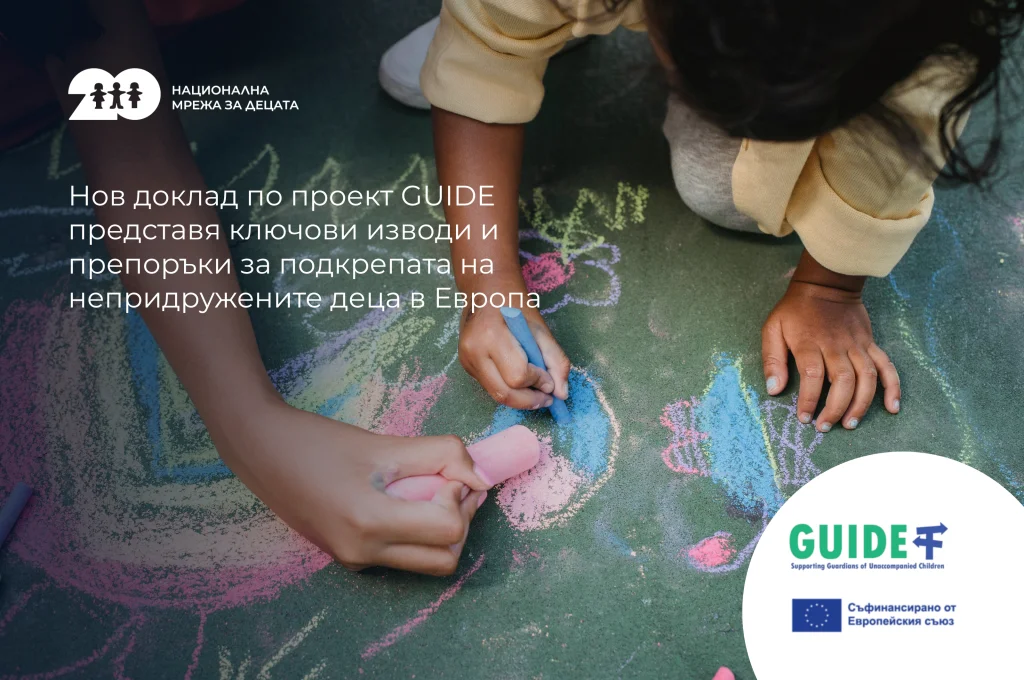
A new report developed as part of the GUIDE project, which aims to strengthen the protection of unaccompanied children in Bulgaria, Greece, Italy, Poland and Slovakia, presents key findings on what legal representatives need in order to effectively fulfil their role, the barriers they continue to face, and the support required to improve care for unaccompanied children.
Unlike many publications that focus solely on policies or training outcomes, this report puts the experiences of legal representatives and child protection professionals at the centre. It draws on months of work and activities carried out across five European countries and highlights practical solutions to the everyday emotional, practical and systemic challenges they encounter.
The report identifies a number of recurring themes, including:
- building trust with children;
- working with trauma;
- supporting children’s participation in decision-making;
- coordination between different services and institutions;
- preventing professional burnout;
- ensuring inclusive and adequate support for children with disabilities.
The findings show that legal representatives need a broad range of knowledge and skills that go far beyond legal expertise. They need to understand children’s rights, migration procedures, the principles of inclusion of persons with disabilities, child protection mechanisms, case management, effective communication, and ways of working with different services and institutions.
Well-prepared professionals also need opportunities to exchange experiences, discuss challenging situations and learn from one another. The project findings show that creating spaces for peer support among professionals, such as the Listening Circles established through the GUIDE project, contributes to greater professional resilience and ultimately improves the quality of support children receive.
Support for children with disabilities and developmental difficulties should be an integral part of legal representation practice, rather than a separate issue. This requires stronger cooperation between child protection systems, disability support services, education, healthcare and social services.
Effective legal representation is the result of well-coordinated systems, supportive organisations, informed policies and professional communities that enable specialists to protect, represent and support children in meaningful and sustainable ways.
You can read the full report in Bulgarian, as well as in English, Greek, Italian, Polish, Slovak and Ukrainian.