A ‘good’ score of 3.53 is the grade the state received for its care for children and families in the „Report card 2025“ from the National Network for Children (NNC). For 2024, the state has lowered its success and is once again beginning to return to its average performance, as in most of the last 14 editions of the NNC’s monitoring report.
It is noteworthy that for a total of the nine areas in the report, the scores for 5 of them have decreased (‘Child Participation’, ‘Justice for Children’, ‘Early Childhood Development’, ‘Child Health’ and ‘Sport, Culture and Free Time’). Only ‘Child Wellbeing’, ‘Family Environment and Alternative Care’, ‘Protection of the Child from all forms of violence’ and ‘Education’ registered a slight increase in their results.
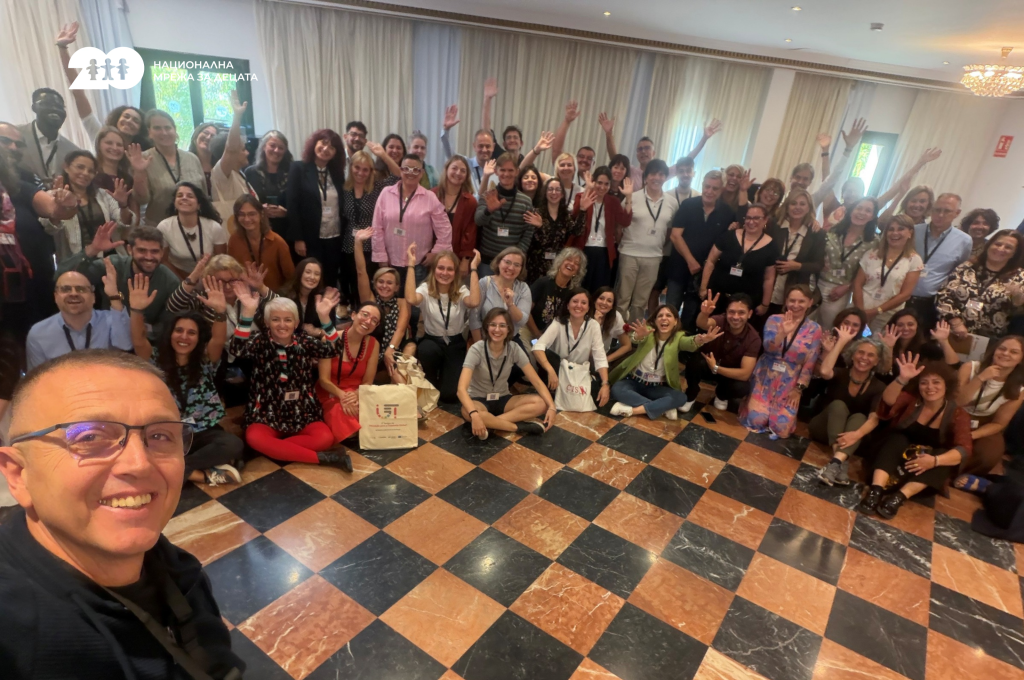
The grade was announced to politicians, senior government officials, and media under the dome of the Largo in Sofia and in the presence of children from the ‘Megaphone’ Youth Network, who made statements and asked questions directly to the politicians.
The presentation of the data and recommendations in „Report card 2024“ was also attended by members of the parliamentary committees on healthcare, education, labour, social and demographic issues, as well as the executive branch – the Ministry of Education and Science, the Ministry of Health, the Ministry of Labour and Social Policy, the Ministry of Interior, the Ministry of Justice, experts from the Sofia Municipality, the State Agency for Child Protection, the Agency for Social Assistance, the National Health Insurance Fund, and others, who participated in the discussion of state policies for children and families in the country over the last year.
Data and main conclusions from the report, as well as the scores in each of the nine areas of the monitoring, were presented by Georgi Bogdanov – Executive Director of NNC, Georgi Elenkov – legal counsel and Director of „Child Policies“ at NNC, Bella Damyanova – „Child Policies“ coordinator at NNC, Dr. Antoaneta Toncheva, a molecular genetics expert from the ‘Bridges Community’ association, one of the faces of the cause for ensuring therapeutic food for children and adults with protein-calorie malnutrition as a state-provided care – ‘Child Health’; Mrs. Lyuba Yordanova, Senior Specialist in ‘Strategic Partnerships’ at the ‘Together in Class’ foundation, she is responsible for preparing the organisation’s strategic documents and presents the experience of ‘Together in Class’ to various audiences – ‘Education’; Mrs. Diyana Videva, a psychologist and member of the Board of Directors of the ‘Demetra’ Association, a professional with over 25 years of experience in the fight against domestic violence – ‘Protection of the Child from all forms of violence’.
Isabella Traykova from the ‘Dream in a Pocket’ foundation and Plamen Panayotov from the ‘Mission Wings’ foundation of the NNC ‘Megaphone’ Youth Network asked direct questions to the politicians in the hall. Highlights for three of the total nine areas of the report were presented to the Commission: Child Health (average 3.14), Education (good 3.87), and Protection of the Child from all forms of violence (good 3.64).
The expert study is again based on data from over 25 national, state, and municipal institutions, analyses, and evaluations from 40 authors, over 130 organisations and activists from the Network, 7 external evaluators, nearly 8,000 children and adults surveyed, as well as institutions that provided data under the Public Information Access Act and maintained an active dialogue with the team behind the report. The grade in the „Report card“ is above ‘average’ (3.53) for the second consecutive year, which also acknowledges the many positive trends and practices in the country related to supporting families. For example, amendments were adopted to the Civil Registration Act, which guaranteed the receipt of personal documents for over 120,000 Bulgarian citizens over 14; the National Health Strategy until 2030 became a reality; 15 days of absence with a parent’s note were accepted; key operations for social, educational, and health support to vulnerable families under the plan for the European Child Guarantee were implemented. All of this is presented and evaluated in detail in the current report. The hundreds of recommendations in this year’s „Report card“ clearly show: policies for children are not a lottery. They are a structural component of the rule of law and require consistency, data analysis, and responsible state decisions.
Throughout 2024, the state often chose the sensational over the substantial. While the 50th National Assembly was amending the Public Education Act to solve the non-existent problem of „propaganda of non-traditional sexual orientation“ in the Bulgarian classroom, serious problems in the education system remained unresolved, such as the lack of a quality management standard; too early specialisation; huge regional differences and secondary segregation of school communities; the fact that at least 1/3 of children with disabilities in Bulgaria do not attend school. While civil activists from the Public Council for the National Children’s Hospital were summoned for explanations at the State Agency for National Security on complaints filed by a commercial company – the reform in child and maternal healthcare did not happen again. The continued lack of mechanisms for authentic child participation in 2024 is also alarming. For the current edition of the „Report card“, the National Network for Children surveyed 3,141 children and 4,617 adults from all over Bulgaria. But how many children and parents were consulted by the institutions and legislators on key reforms in education, child healthcare, access to services, housing policy, protection from violence, justice, sport, and culture? „Report card 2025“ is not a verdict. For 14 years, this unique monitoring report has established itself as a basis for a deep, informed, and constructive dialogue between civil society and the state and as a catalyst for many significant changes.
The grades in the „Report card“ are written on the principle of those in school – from ‘poor’ 2, when the state has taken no action to solve problems in the report’s areas, to ‘excellent’ 6 for implemented measures with proven effectiveness. The annual report evaluates the progress of state institutions in the care for children in 9 areas – Wellbeing, Family Environment and Alternative Care, Protection from all forms of violence, Justice, Early Childhood Development, Education, Healthcare, Sport, Culture and Free Time, and Child Participation. Here is the most important information from each area.
What do the scores in „Report card 2025“ tell us? What is the state’s average success in caring for children?
Children’s participation
Score on the topic: 3.11
In 2024, ensuring authentic and meaningful participation of children and young people from different communities remained a challenge. Despite the presence of more forums organised by the civil sector, with or for children, there was a difficulty at an institutional and societal level related to understanding and, most importantly, creating spaces where opinions on issues and problems that affect children’s lives could be met. Access to age-appropriate public information on laws and policies relevant to them continued to be lacking. The only progress noted was with the child’s version of General Comment No. 26 of the Committee on the Rights of the Child, adapted by UNICEF Bulgaria, concerning the rights of children, the environment, and climate change. The state and municipalities do not use digital tools to consult with children. According to the children, the government is not sufficiently interested in their civic position, although the inclusion of politicians and their conversations with children on important topics at forums organised by civil society organisations is noted as positive. Pilot initiatives for teaching children about human rights and civic activism remained with limited scope, resources, and benefits. They continued to be implemented as part of informal civic education programmes but are either missing or weakly represented in the curriculum.
CHILDREN’S WELFARE
Score on the topic: 3.81
In 2023 (data for 2024 is not yet available), 57,478 children were born in Bulgaria, of which 57,197 (99.5%) were live births. According to Eurostat, the country is a record-holder for birth rates in the EU for 2023. 33.9% of children are at risk of poverty and social exclusion.
This share is nearly twice as high as the eight European countries with the lowest share of children in this group. With regard to the risk of poverty alone, 26.9% of children fall into this group. The share is more than twice as high as the six European countries with the lowest share of children in this group. A focus on reducing poverty and providing support to children and families is placed in the National Strategy for Reducing Poverty and Promoting Social Inclusion 2030. An active labour market policy is the measure under Article 36 of the Employment Promotion Act, which supports unemployed persons from disadvantaged groups. In 2024, the amounts of some family benefits for children under the Family Benefits for Children Act were increased, which is noted as a positive line of work. Also in 2024, a National Housing Strategy and a legislative framework to set goals for adequate social housing and to solve the problems of illegal housing in neighbourhoods with the worst economic, social, and ecological characteristics were not adopted. For another year, the country remains without a National Strategy for the Child. In 2024, the National Council for Child Protection adopted the Draft Strategy, and the process was not finalised. Without this document, consistency in the monitoring, evaluation, and improvement of policies in support of children and families could not be ensured.
FAMILY ENVIRONMENT AND ALTERNATIVE CARE
Score on the topic: 3.76
Despite the official adoption of the National Map of Social Services in 2024, financial standards for social services continued to be lacking and the workload of social workers was not regulated. The Map lacked an analysis based on qualitative indicators of the needs in a given municipality, which naturally leads to a distorted picture of the needs in different regions of the country. Also in 2024, services aimed at parents of children with disabilities did not correspond to the real need, especially concerning places far from big cities. There was no clear horizon outlining the finalisation of the de-institutionalisation process, and three unclosed Homes for Medico-Social Care for Children remained in the country. Amendments to the Ordinance on the terms and conditions for applying, selecting, and approving foster families and placing children in them were adopted, but despite this, foster care remained at a crossroads between the possibility of regulatory improvements and the risk of continued institutional inertia. The service continued to be carried out without financial standards – on a project basis, and there was no consistent support for foster parents and an increase in their public image through state campaigns. With regard to adoption, the Ordinance on the procedure for the registration, keeping, storage, maintenance, and functioning of the National Electronic Information System for full adoption was promulgated.
The amendments to the Family Code also affected the increase in the period for post-adoption supervision and easier access for adoptive parents and adopted children to social services. Despite these changes, the monitoring continued to be formal, without real support and sensitivity to the individual traumas of the children and adopters. The lack of an active and practically functioning Coordination Mechanism for working with unaccompanied children continued, and the number of such children in social services remained extremely small.
Protecting children frorn all forms of violence
Score on the topic: 3.64
In 2024, a number of steps were taken in the protection from violence – changes in the Regulations for the Implementation of the Child Protection Act, where the circle of persons against whom charges can be brought in cases of violence against children was expanded; the possibility of not interrupting parent-child contact during a imposed protection measure. A draft Coordination Mechanism for assistance and support to persons affected by domestic violence was also published, but it was not approved. Actions were taken to build a National Information System for prevention and protection from domestic violence, but there is a delay at the moment. More protection orders under the Domestic Violence Protection Act were issued, and there was also an increased number of pre-trial proceedings initiated for crimes committed in a domestic violence context. The National Programme for Prevention and Protection from Domestic Violence for the period 2024 – 2026 was adopted late, and this did not allow the use of the foreseen BGN 450,000 from the budget for prevention and protection projects. With regard to supporting children in school, there remains a need to apply tracking and analysis of the measures and effects of countering school bullying and to work on its recognition. A serious problem continues to be the lack of state funding for the Centre for Safe Internet, especially given the huge number of signals. It is urgent to update the legislation concerning regulations related to new online risks for children. Synchronisation is needed between all institutions responsible for road safety, as well as effective programmes and measures for the protection of the life and health of children in road traffic.
Children’s justice
Score on the topic: 3.44
In 2024, against the backdrop of the political crisis, the state did not take significant steps in reforming child justice. This determines the lower score in the ‘Child justice’ section this year. Practice shows too many cases of ignorance and non-compliance with judicial and investigative actions with children in contact/conflict with the law and disregard for the procedural rights and the best interests of the children. This year, efforts for a complete reform of the system for combating anti-social behaviour of minors and guaranteeing better prevention of child criminalisation were also absent. The need for more services to prevent the escalation of parental conflicts remains, as well as for the normalisation of an effective legal remedy for the forced execution of the personal relations regime and for increased use of the mediation procedure in family disputes.
Early childhood development
Score on the topic: 3.21
Despite the presence of initial steps towards developing sustainable policies for reforming the system of Early Childhood Intervention (the Annual Plan for 2024 for promoting early childhood development by providing access to social, educational, health, and integrated services, with the aim of reducing negative trends in child poverty and improving the quality of life of young children), systemic problems continue in practice, such as: lack of real access to services, lack of application of modern concepts for working with children, and lack of investment in human resources. The coverage of children in kindergartens is 87.9% for 2023/24, and in nurseries and nursery groups – 17.9% (with an average EU coverage of 93% for ages over 3 and 38% for ages up to 3). The approach to the youngest continues to be in the concepts of objectifying them through the medical model, at the expense of subjectifying them through an individual approach, play, and building social-emotional skills.
CHILD HEALTH
Score on the topic: 3.14
The score in this area is consistently one of the lowest in the „Report card“. The additional decline is mainly due to the unstable political situation and the insufficient progress in healthcare fields with a clear deficit over the years. These include the shortage of healthcare in remote and isolated areas; the still unapproved medical standard for child psychiatry; the lack of analysis of the causes of maternal and child mortality and the high regional differences in this statistic; non-transparent procedures for approving treatment and therapies for children abroad; lack of adequate regulatory framework for the provision and reimbursement of medical foods for patients with malnutrition; non-recognition and lack of systematic addressing of addictions such as gambling, screen, and gaming; lack of evaluation of the effectiveness of measures to reduce smoking and psychoactive substance use. A key advocacy priority of the NNC remained the construction of a National Children’s Hospital, for which it is crucial to follow a transparent plan and have a supply of health specialists. Patronage care remained a good wish for institutions in 2024, without real progress on funding, building a plan for its widespread and systematic implementation to reach those in direct need of it.
EDUCATION
Score on the topic: 3.87
The topic was marked by an amendment to the Public Education Act, which prohibited „propaganda, popularisation, or incitement in any way of ideas and views related to non-traditional sexual orientation and/or gender identity different from biological.“ This unexpected ban created great challenges not only for children with different sexual orientations but also abolished any mention of the topic in school, including in the scarce hours of health education. Against this backdrop, real problems in education remained unaddressed, such as the lack of a quality standard, a wide gap between urban and rural areas in access to education and dropout prevention, lack of support for the inclusion of all children in school, and sustainable mechanisms for preventing aggression among students. Also in 2024, separate hours for health and reproductive education were not introduced. The state did not prioritise effective measures for the inclusion of interdisciplinary topics such as digital literacy and social-emotional learning in the curricula, and progress in them happened in a fragmented manner, based on the availability of additional project funding and the introduction of good practices in school by civil society organisations. In a time of increasing disinformation, a wave of propaganda, and fake news, media content and training for working with it was almost completely absent from the curriculum. The score in this area again noted a rise compared to last year, due to the continued efforts in inclusive education for children with special educational needs and the steps taken to improve the process of selecting and supporting school principals.
Sport, culture and leisure
Score on the topic: 3.80
Also in 2024, a problem was noted with the insufficient knowledge, skills, and attitudes towards a healthy lifestyle among adolescents in the 10-19 age group. The National Programme „Together in Arts and Sports“ for the third consecutive year noted a growth in the coverage of students, and more and more museums now have a corner for working with children and special activities aimed at children. However, access to culture still remained an elite activity, mainly due to fragmented initiatives and the lack of coordination between institutions to promote the inclusion of marginalised groups. The number of outdoor, public, and free playgrounds for sport and physical activity increased, with the problem of their preservation remaining. There also remained a need for an analysis of the socio-economic barriers, including regional inequalities and financial limitations, to access to physical activity, sport, and culture.
See the shortened version of ‘Report card 2025’ HERE.